a travel memory, printed on silk
a place you went becomes a painting, then line art, then a printed silk scarf and a short film, with two processes and a handful of small sandbox tools between them.
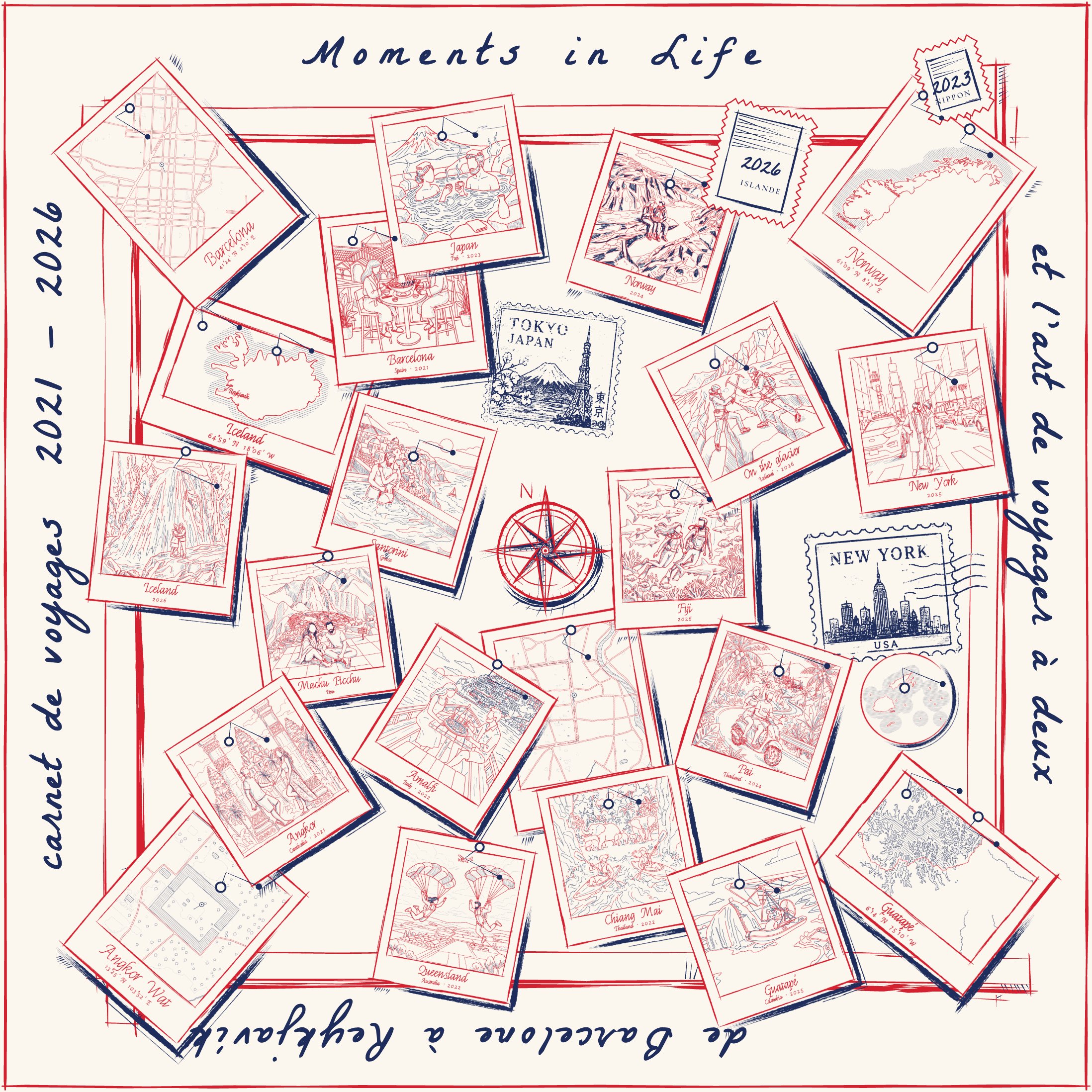
The brief is a personal one: a red-ink silk scarf that carries a couple's trips as a pinboard of small polaroid drawings, one per place, with stamps, a compass and a cup of coffee in the gaps. Each memory had to be redrawn in a single drawing style, then arranged on one square of silk, then filmed. The project is called Moments in Life.
1 · paint the memory
The first process, Matisse Travel Portrait, takes a scene brief as text and, optionally, a reference image. It paints the scene in a locked flat-colour Fauvist style with a faceless duo. Because the style is locked inside the process, every memory comes out in the same hand. That is what makes a set of drawings read as one series.
2 · restyle it as line art
The second process, Line Art Duo, takes the painting, an ink colour (detected from the image or given as a hex) and a background colour (paper, white, transparent or hex). It returns two versions of the same scene: one outlines only, one with light hatch shading. A reviewing step compares them with the style references before delivery.
3 · to vector
Printing on silk needs clean vector lines, so three small sandbox nodes turn the line art into SVG: Outline → SVG, Light shades → SVG, and a cloud variant for the scarf. A fourth, Stamp cut-out, recolours stamps to the scarf's ink. Another, PNG patch, pastes a region from one image into another when a fix is smaller than a regeneration.
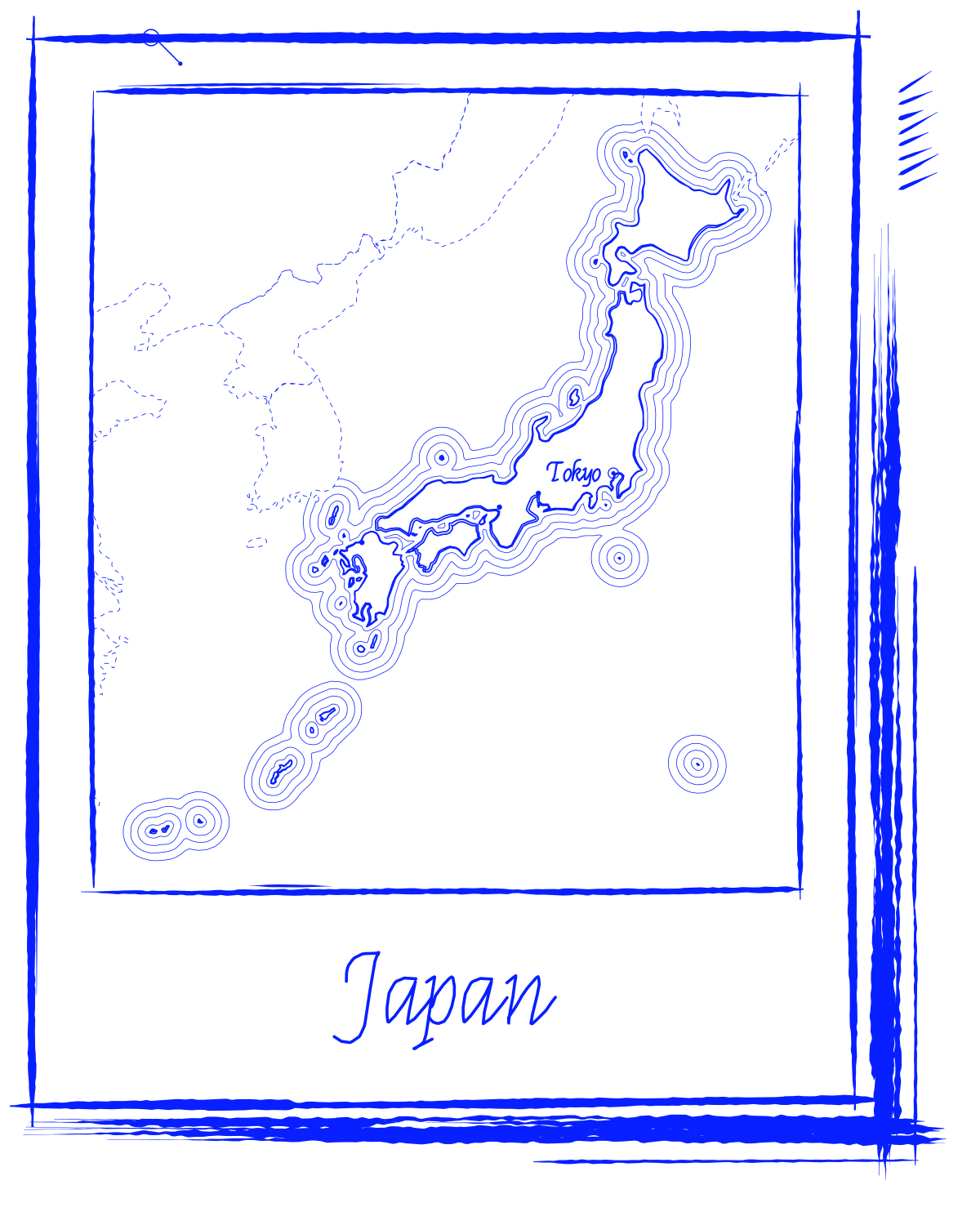
A Line-art map card sandbox draws a place as a map polaroid.
4 · lay it out
The scarf itself is an image composer node. The composer keeps every element of a design as its own layer, so you can move one memory and leave the rest where it is. The canvas holds a single-ink version and a duo-ink version. One uses red alone, the other adds a blue.
5 · the film
A written plan sits in a note: a vertical film of 30 to 35 seconds in eight beats, from the snap of a photo wall, the rewind, the making, the layout and the detail, to the scarf worn and an end card. The rules are written in the same note: one red ink on ivory silk, natural light, lowercase bold centred text.
The method is two-step. Nano Banana Pro makes keyframes for each shot, the owner approves them, and only then do Seedance 2.5 and Kling v3 Video animate between them. Beats showing the process itself, such as the drawings dealt onto the template and the map generator at work, are 3D model nodes in animate mode, so the film shows the real canvas. A video editor node assembles the cut, called Film II — cabinet to coast, and Lyria 3 Pro supplies a score.
what to borrow
- Lock a style inside a process. The painting process is the series' house style: make a process.
- Write small tools as sandboxes. Line art to SVG, a map card, a patch tool: live apps, scripts and cloud runs.
- Lay out print art in layers. image composer.
- Approve keyframes before spending on video. model nodes and generations.
- Film the canvas itself. assembly and motion and video editor.
checked against the product · 2026-10-23