a jewellery production line
one inspiration picture and a metal colour go in; a signed-off ring stack, its photoshoots and a showcase film come out, six processes in a row.
A jewellery brand wants middle bands that nest into one of its signature ring stacks. Each new design starts from a picture a client loves, a tile pattern, a wing, and must end as a ring that can really be made, photographed and shown off. Here that is one pipeline: six processes wired in a line, run once per brief as a session.
The pipeline takes three inputs: an Inspiration Image, a Metal Color and free-text Additional Remarks / Custom Requirements. Every other value is handed down the line by the previous process.
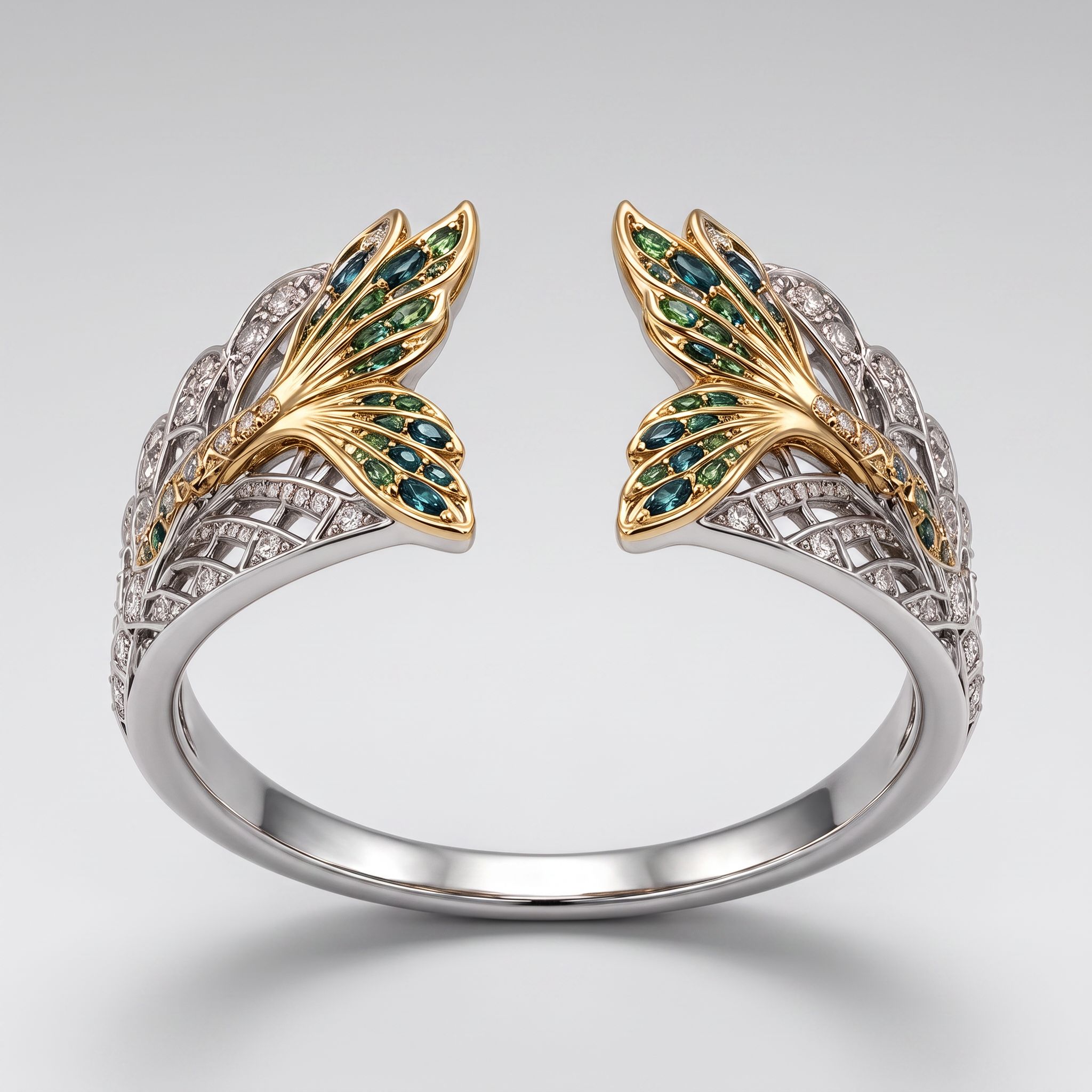
1 · the middle-band generator
The first card is a process worked by Aurora, the goldsmith. Its Metal Color is a pick-one list: Rose Gold, Yellow Gold, White Gold, Platinum or Bicolor. Its manual, kept on the process canvas as a note, spells out the job: one inspiration image becomes three bands, Tier 1 Daily Wear, Tier 2 Faithful Inspo and Tier 3 Master-Tier, each a different craft.
Before any picture exists, Aurora searches the org wiki once per craft axis and fills in a sourcing card. The manual's rule is "no card, no render". Only then does it write three prompts and run three Seedream 5 Pro nodes in one batch, with Nano Banana Pro nodes wired in as fallbacks. A list of QC gates sits on the canvas: a closed ring is an automatic fail, and so is a stub terminal that only shows at full zoom.
2 · photoshoot and design sketch
The approved band goes to Hoshi, the ring stylist, who shoots it with Nano Banana Pro and draws a design sketch beside it. The picture above is from the session called Mermaid. This card's output travels twice: forward to the stack, and sideways into card 4 as its Detail References.
3 · stack assembly
Moss, the jeweller, receives the Middle Band Image and builds the band into the full stack, with Seedream 5 Pro. The result is one image of the stack assembled.
4 · three-quarter photoshoot
Peaches takes the Ring Stack Render plus the detail references from card 2 and shoots a three-quarter hero with Nano Banana Pro. Two lines into one card is the part a single prompt box cannot hold.
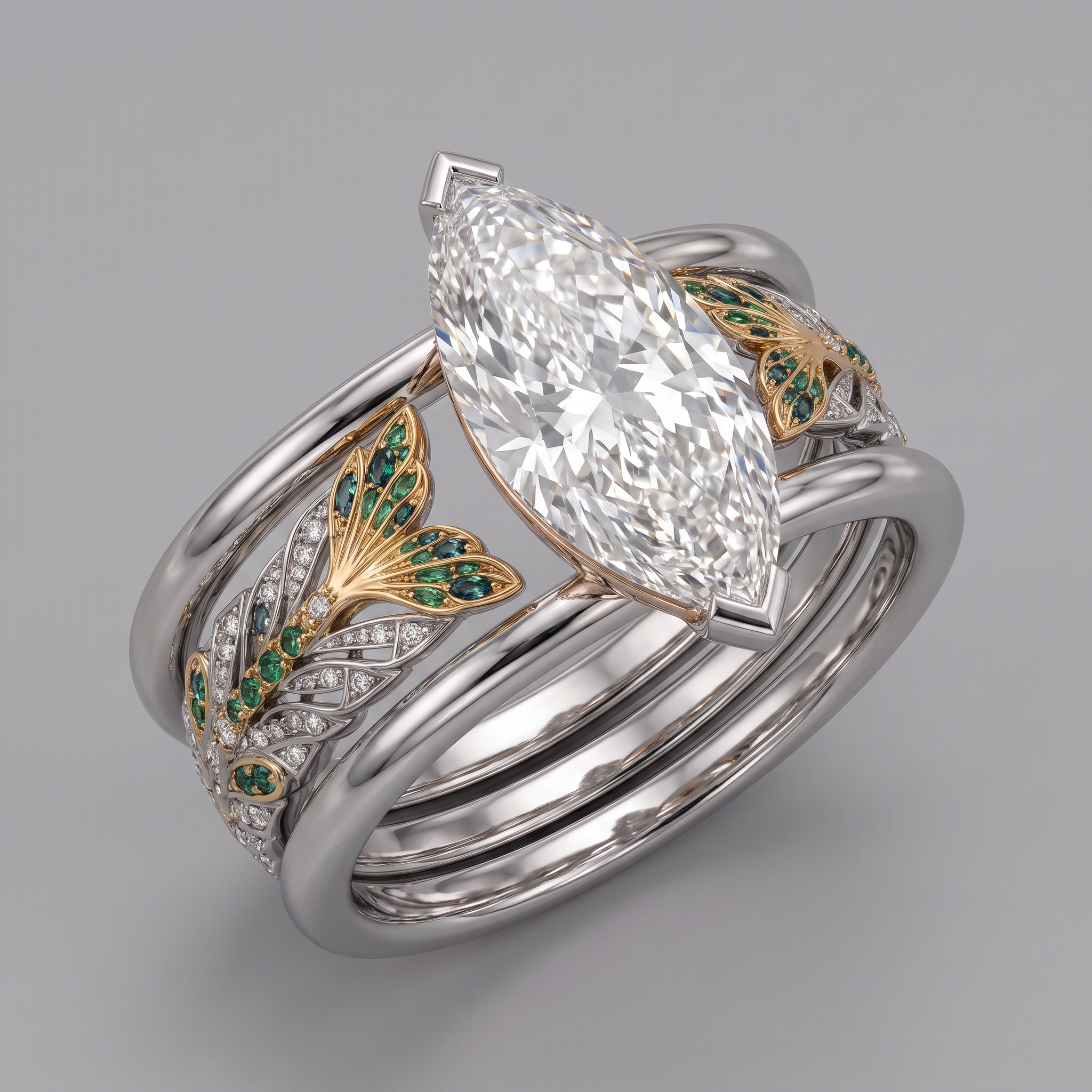
5 · try-on and QC
Maple, the atelier master, receives both the stack assembly and the three-quarter render as the Ring Assembly Render (the port is set to combine them) and runs the virtual try-on and QC with Nano Banana Pro. The renders from this stage are not shown here.
6 · showcase video
Pixel, the videographer, turns the approved try-on image into a short film with Kling v3 Video. The pipeline's output collects the deliverables of cards 2 to 6, so one session ends with photographs and a film in one place.
the session record
Five sessions have run on this pipeline, named Crab, kika, Mermaid, mermaid and mosque. Mermaid has seven runs and every one was approved before the next card started. Each hand-off is scoped to the run that made it, so a second session never mixes its pictures with the first.
what to borrow
- Fix the recipe once, in a process. Each stage is a process with named inputs: make a process.
- Chain them and run per brief. Inputs, hand-offs and a single output: build a pipeline, then sessions.
- Put a person at the gates that matter. Every hand-off waited for an approval: approvals and review and improve.
- Teach the pixies your standards. The sourcing step reads the team's own guide: wiki.
- Name the model per stage. Image, edit and video models side by side: model nodes.
- Give each stage a worker. meet the pixies.
checked against the product · 2026-10-23